Why Version Control Exists: The Pendrive Problem
Introduction
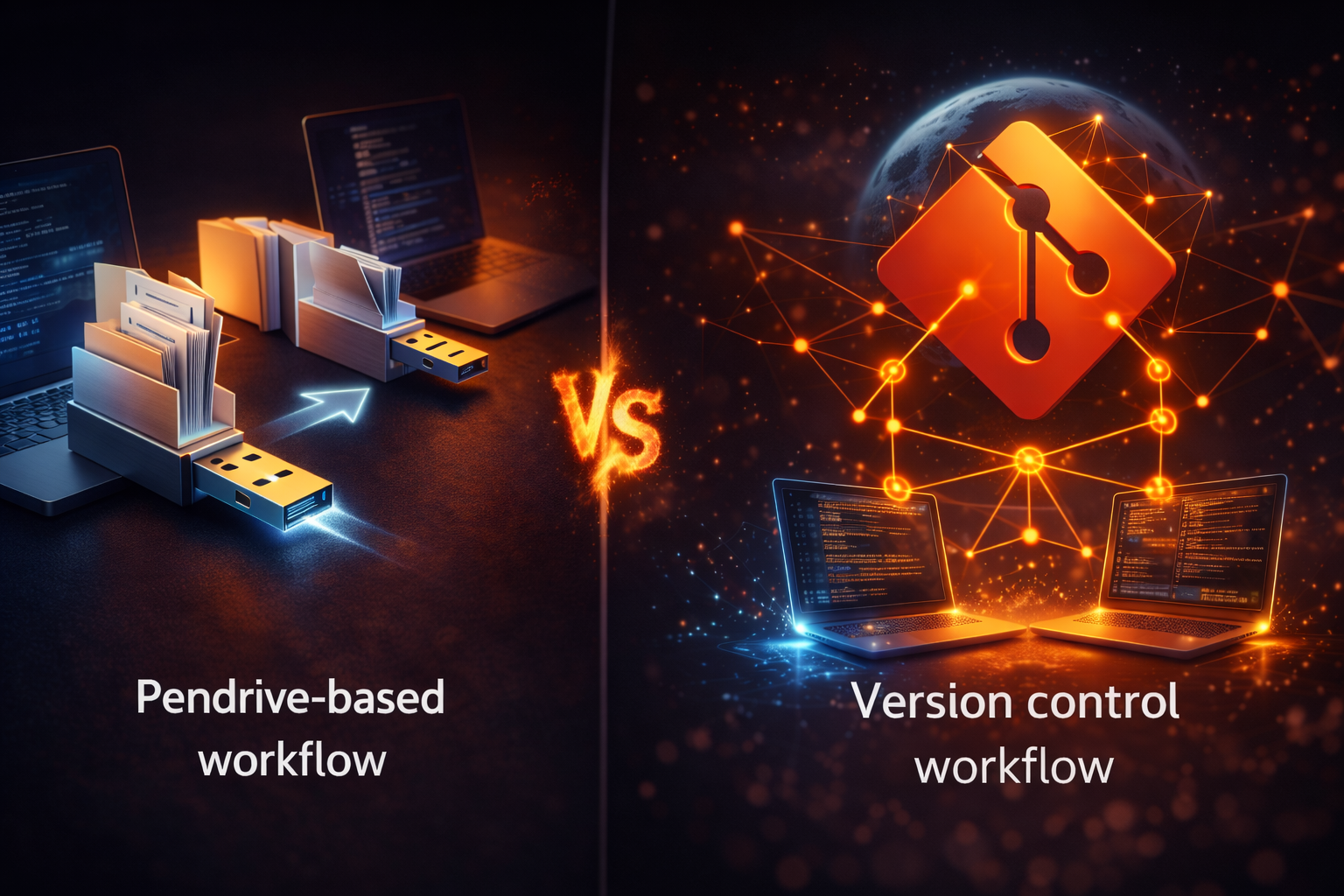
In earlier days, technology was not as advanced as it is today, and developers often struggled to work together on the same codebase. Collaborating on a single file was difficult, and managing changes manually consumed a lot of time.
To solve these problems, distributed version control systems were introduced. They help track every change made to the code and allow multiple developers to work on the same project without worrying about breaking the final version.
The Pendrive Analogy in Software Development
Before modern collaboration tools existed, developers often shared code using pendrives, emails, or zipped folders. This approach worked for very small projects but quickly became problematic as collaboration increased.
Imagine you are working on a product and need help implementing an AI feature or backend logic. Since you are not an expert in that domain, you zip your entire codebase and share it with another developer using a pendrive or email. The other developer makes changes, fixes some issues, and sends the updated code back to you.
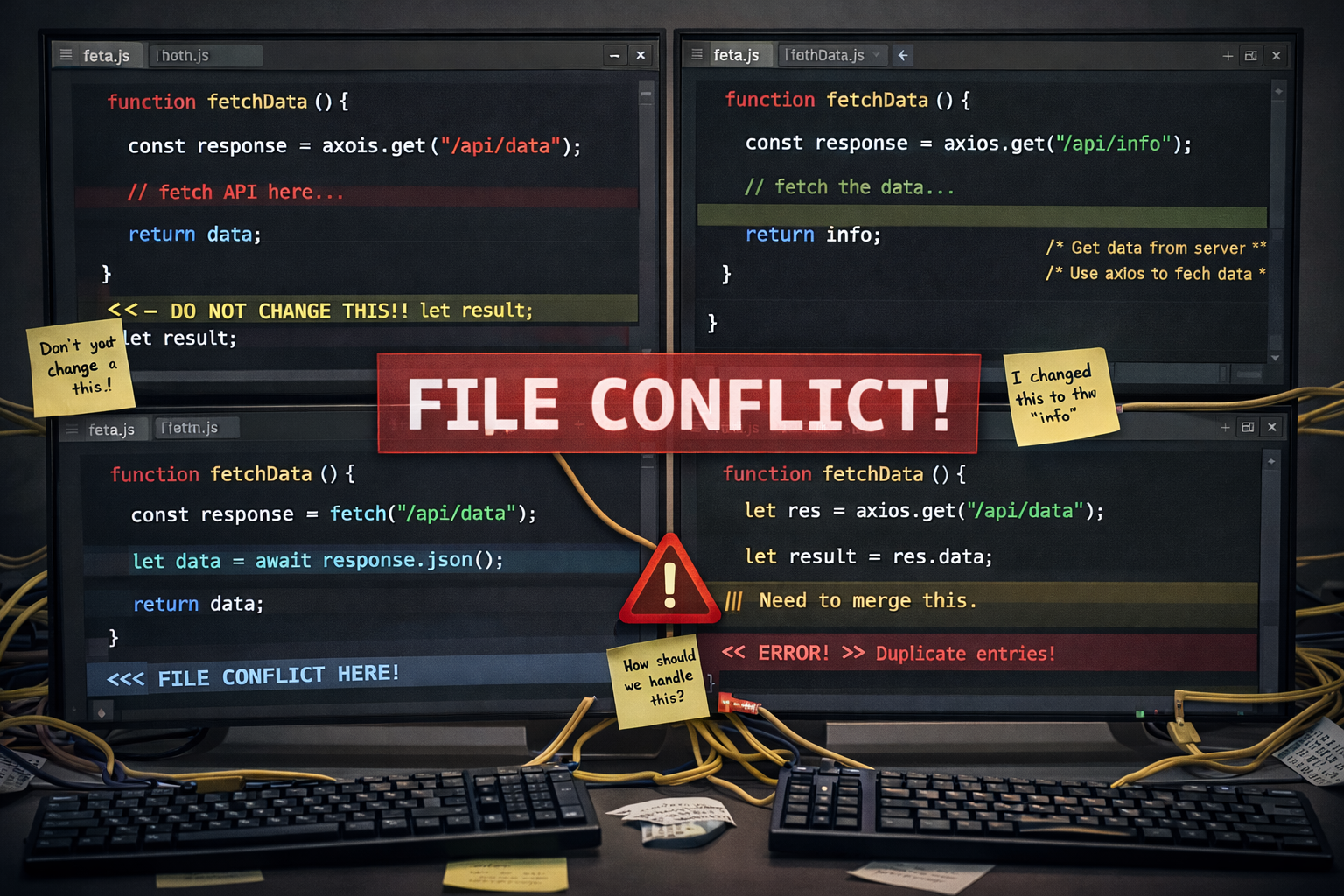
When you open the received code, you notice that the project works, but you have no idea what changes were made. You then continue developing new features on your local copy. Later, the other developer discovers a bug in the earlier version of the code and fixes it on their system. However, your codebase has already moved forward, and now both versions are different.
At this point, both developers are forced to wait for each other. There is no clear way to track changes, no single source of truth, and no guarantee which version is the final one. This situation often leads to folders named final, final_v2, latest_final, or final_really_latest, creating confusion instead of clarity.
This entire situation is commonly referred to as the pendrive problem. It highlights the challenges of manual code sharing, where changes are lost, bugs are reintroduced, and collaboration becomes slow and unreliable. These problems led to the creation of distributed version control systems, which track every change and allow multiple developers to work on the same codebase simultaneously without waiting for each other.
Problems Faced Before Version Control Systems
Before version control systems existed, developers faced several challenges while working on shared codebases:
Unable to track changes: Developers had no clear way to know what changes were made, when they were made, or who made them.
No simultaneous development: Only one person could work on the code at a time, forcing others to wait and slowing down progress.
No single source of truth: There was no main or authoritative copy of the codebase, leading to confusion about which version was correct.
High inconsistency in code: Manual copying and merging of files often introduced bugs and unstable behaviour.
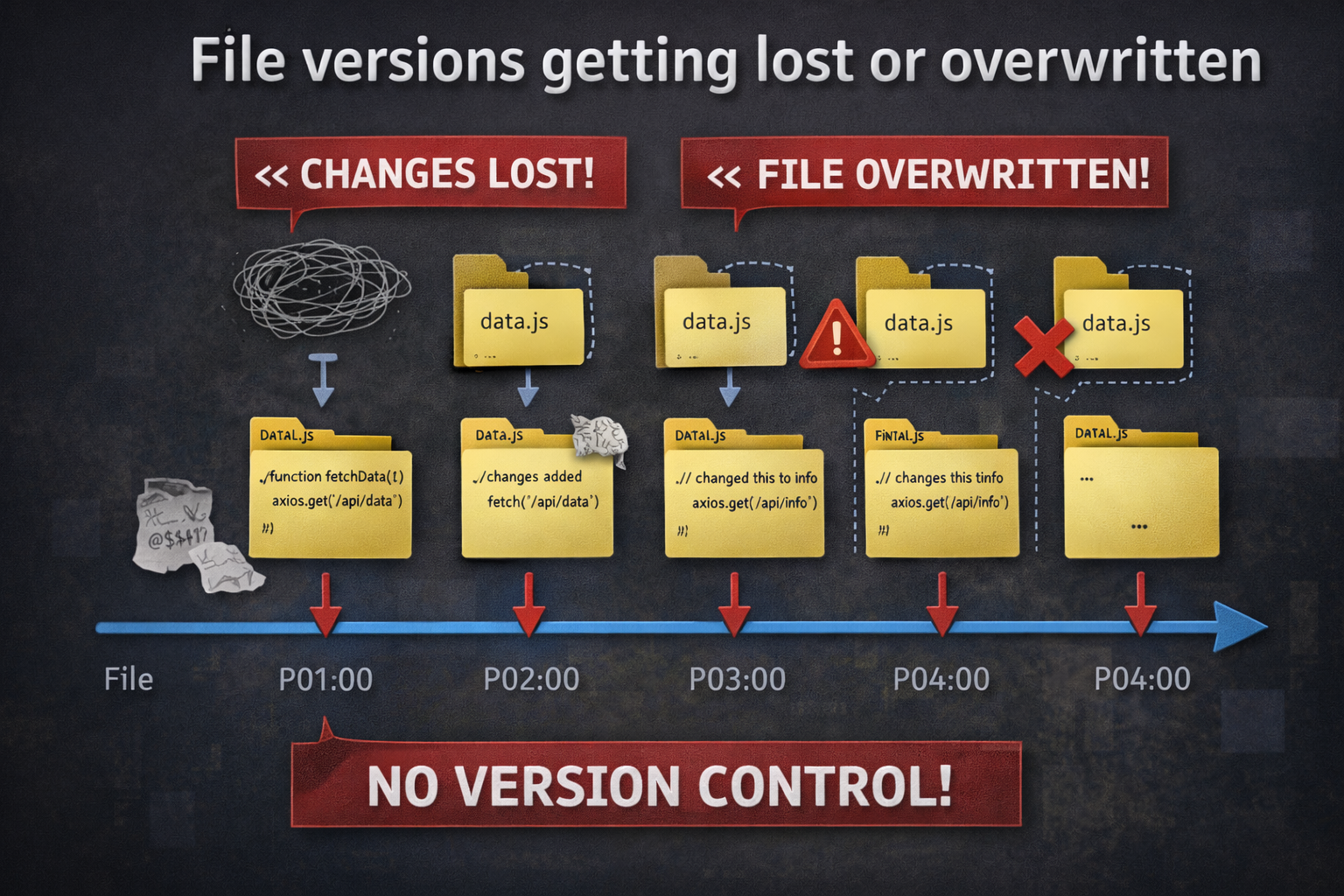
Overwriting of code: Changes made by one developer could easily overwrite another developer’s work.
No change history: If a bug was introduced, there was no way to go back to a previous stable version.
Difficult bug tracking: Identifying when and where a bug was introduced was extremely hard.
Poor collaboration: Team coordination depended on manual communication instead of tools.
High risk of data loss: If a pen drive, email, or local system failed, the code could be lost permanently.
Why Version Control Became Mandatory in Modern Development
As software projects became more complex, multiple team members were required to work on the same codebase. Managing changes manually was no longer practical, especially when everyone was contributing simultaneously.
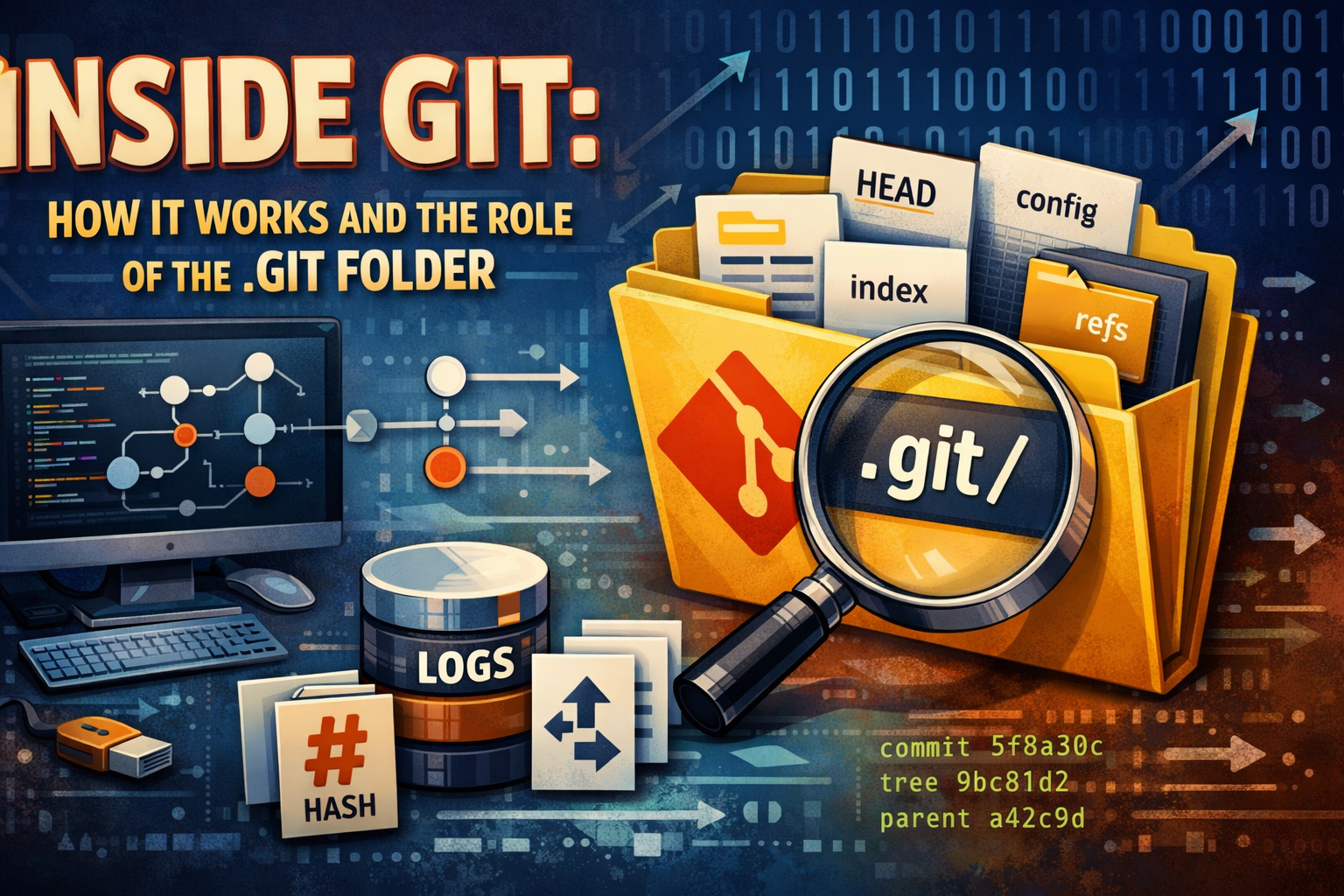
To ensure smooth collaboration, developers needed a way to track changes, avoid conflicts, and maintain a single source of truth. This is why tools like Git became essential, as they keep a complete history of all changes. Platforms like GitHub further simplified collaboration by providing a central place where developers can share code and work together efficiently.
Conclusion
In the end, version control systems solve the core problems of tracking changes and enabling collaboration on a shared codebase. They allow multiple developers to work on the same project simultaneously while maintaining a complete and reliable history of changes. In today’s world, where software projects are large, complex, and built by many teams, version control has become a mandatory part of modern software development.
Comments
Join the discussionNo comments yet. Be the first to comment.